Best EV Chargers for UK Holiday Lets (2026)

Written by Billy Karidis, Co-founder, GuestCharge
Last updated: 12 July 2026 · 9 min read
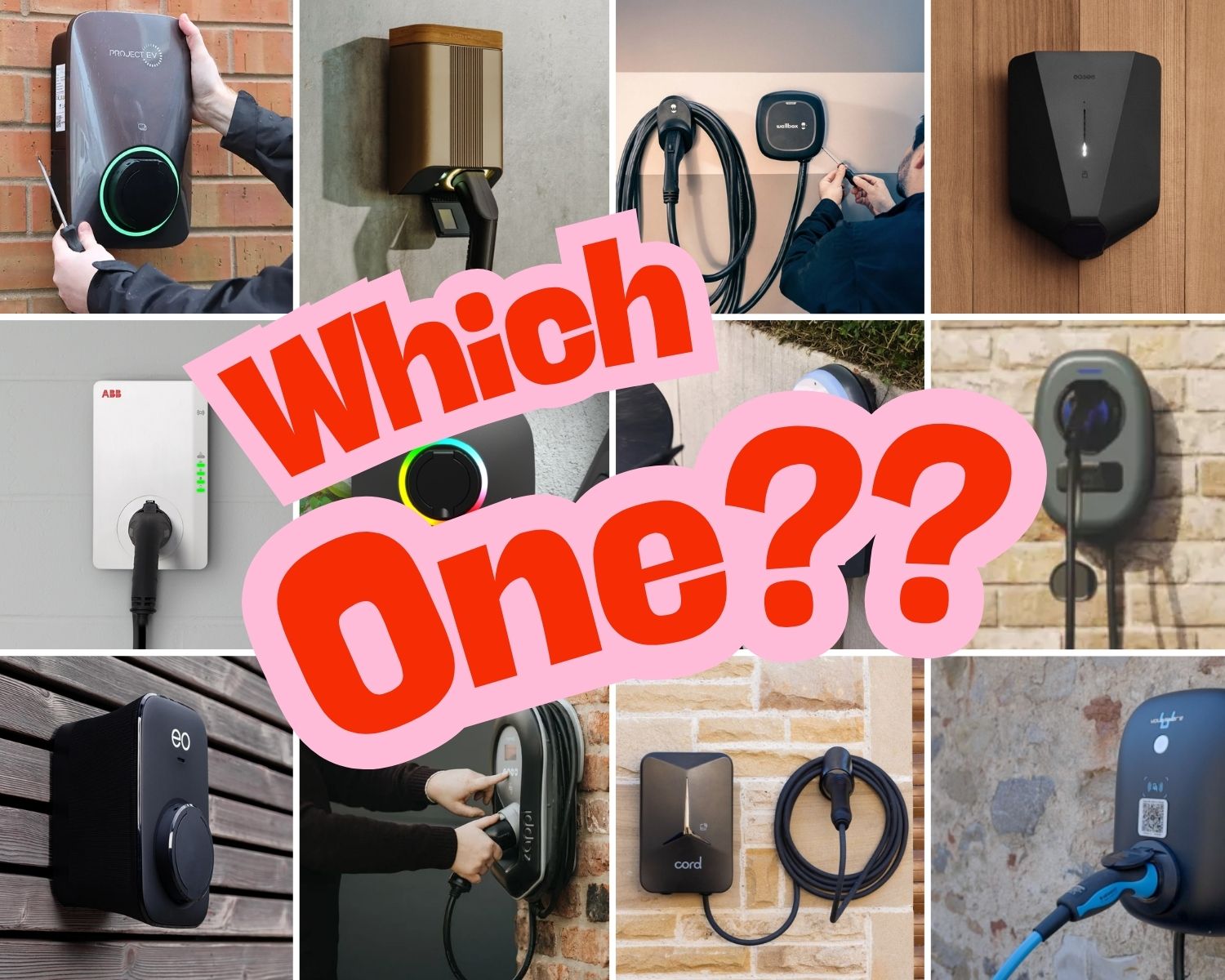
Quick answer: The best EV charger for a UK holiday let is one that is OCPP-compatible (so you can bill guests through a platform like GuestCharge), durable enough for unattended outdoor use, and either has a built-in MID-certified meter or can take an external one. For most holiday let owners that means the Easee Charge Max (built-in MID meter), the MyEnergi Zappi (best if you have solar), the Wallbox Pulsar Plus (cheapest, most compact), or the Pod Point Solo 3 (largest UK support network). The single most important spec is OCPP support. Without it, you can't bill guests fairly per kWh.
Choosing an EV charger for a holiday let is a different decision from choosing one for your own home. At home you optimise for your car, your tariff, your habits. At a holiday let you're buying a piece of equipment that strangers will use unsupervised, that needs to survive years outdoors with no one watching it, and that ideally pays for itself by letting guests cover their own charging.
Those differences change which features matter. A charger that's perfect for a homeowner can be a poor choice for a rental, and the specs the review sites obsess over (solar diversion, smart-tariff automation) often matter far less than the ones they barely mention: billing compatibility, durability, and who answers the phone when it stops working two hundred miles from where you live.
This guide ranks the main options through a holiday-let lens, explains the one spec that matters more than any other, and clears up the grant question (including the one most holiday let owners wrongly assume they can claim).
The one spec that matters most: OCPP
Before any brand comparison, understand this, because it's the thing that determines whether your charger can ever earn you money.
OCPP (Open Charge Point Protocol) is the open standard that lets a charger talk to third-party billing software. If your charger supports OCPP, you can connect it to a platform like GuestCharge and have guests pay per kWh by scanning a QR code. If it doesn't, you're locked into the manufacturer's own app, which usually has no proper guest-billing feature at all, leaving you back at absorbing the cost or guessing at a flat fee.
So the rule is simple: whatever else you weigh up, the charger must be OCPP-compatible if you ever want to bill guests. The detail varies by model, and it's worth understanding the difference. The Easee Charge Max and Easee One support OCPP 1.6J directly. The Zappi supports OCPP too, but through a cloud-to-cloud service (myenergi's servers translate between their own protocol and OCPP), which works in practice but requires a Wi-Fi model on current firmware. The Pod Point Solo 3 is the most closed of the group, with no straightforward route to third-party billing, so it's the one to check most carefully. We flag the position for each charger below. The key point: confirm the current OCPP status of the specific model and firmware before you buy, because it's the difference between a charger you can bill from and one you can't.
The second thing to get right: the meter
To bill a guest fairly and lawfully for the electricity they use, the measurement has to come from a meter that's certified for billing under the Measuring Instruments Regulations 2016 (MID). A reading off a charger's own internal estimate isn't good enough if a guest disputes it.
Some chargers ship with an MID-certified meter built in. Most don't, and need an external MID sub-meter fitted alongside, which your electrician can do at install. Neither is wrong, but it affects the total cost and the install, so it's worth knowing before you buy rather than after. We've covered the full detail in our guide to MID-meter compliance for holiday let EV chargers, but the short version appears in each charger's entry below.
The chargers, ranked for holiday lets
Easee Charge Max — best for billing out of the box
The Easee Charge Max is the closest thing to a holiday-let-native charger, for one reason: it includes a built-in MID Class B meter, which Easee certifies for billing under the Measuring Instruments Directive. That removes the need for a separate sub-meter and makes the billing side genuinely plug-and-play. It supports OCPP 1.6J directly, it's compact, and Easee's hardware is among the better-looking on the market, which matters more than you'd think at a property guests are choosing partly on photos.
The trade-off is price and that Easee's UK support network, while fine, isn't the largest. But if your priority is the simplest possible route to billing guests compliantly, this is the one to start with.
- Billing: built-in MID meter, OCPP-compatible. The least-friction option.
- Best for: owners who want billing sorted with the fewest moving parts.
MyEnergi Zappi — best if the property has solar
The Zappi's headline feature is solar diversion: its ECO and ECO+ modes are widely regarded as among the most refined systems for charging a car from surplus rooftop solar. If your holiday let has solar panels, that's a real advantage, because guest charging can run partly off generation you'd otherwise export cheaply.
For billing, the Zappi supports OCPP, but it's worth understanding how: rather than connecting directly to a billing platform, it uses a cloud-to-cloud service where myenergi's servers translate between their own protocol and OCPP. In practice it behaves like any other OCPP charger and there's a dedicated commercial mode for charging users per kWh, but it needs a Wi-Fi model on current firmware, and in its standard form it generally needs an external MID sub-meter fitted alongside for compliant billing. It's a well-regarded, UK-designed unit with a strong following. Just be aware it sits at the pricier end once installed.
- Billing: OCPP via myenergi's cloud service (Wi-Fi model, current firmware); typically needs an external MID sub-meter.
- Best for: properties with solar panels.
Wallbox Pulsar Plus — best on price and size
The Pulsar Plus is one of the most compact chargers on the market and one of the cheapest, with hardware around £549 and OCPP support that makes it a solid billing-capable choice. For a holiday let where you want a tidy, unobtrusive unit and you're watching the budget, it's a strong pick.
Two trade-offs to know. Wallbox's warranty is shorter than most competitors at two years, which matters more for a rental you intend to keep for a decade. And for compliant billing it needs an external MID sub-meter (Wallbox sells a compatible one). Neither is a dealbreaker, but factor them in.
- Billing: OCPP-compatible; needs an external MID sub-meter.
- Best for: owners prioritising low cost and a compact unit.
Pod Point Solo 3 — best for UK support reach
Pod Point is the volume player in UK home charging, with one of the largest installed bases and service networks in the country. For a holiday let owner who values the reassurance of a big, established UK company when something goes wrong at a distant property, that reach is worth something real.
The catch for your use case is that the Solo 3 is a largely closed, cloud-locked system. Owners frequently note the lack of local control, and there's no straightforward route to point it at a third-party billing platform, so if billing guests is your goal, this is the charger to check most carefully before committing (Pod Point's newer Solo 3S uses a different OCPP platform, but that's aimed at Pod Point's own features, not opening it up to third-party billing). Like most here, it would also need an external MID sub-meter for compliant billing.
- Billing: more restrictive; check current OCPP support before buying for billing.
- Best for: owners who prioritise a large UK support network over billing flexibility.
How to actually choose
The honest shortcut: get the Easee Charge Max unless you have a specific reason not to. The built-in MID meter removes the most fiddly part of billing guests, and for a property you're not standing next to, fewer moving parts is worth paying a bit more for.
The reasons to go elsewhere are specific ones. If the property has solar, the Zappi earns its place on how well it uses surplus generation. If you're genuinely budget-constrained, or the spot you're mounting it is tight, the Wallbox Pulsar Plus is cheaper and smaller. And if the thing that worries you is who you call when it breaks at a cottage three hours from home, Pod Point's support reach is the reassurance you're paying for, as long as you accept that billing through it is more work.
Whichever way you go, two things you can't skip: confirm it's OCPP-compatible, and decide before you buy whether you're getting built-in MID metering or budgeting for an external sub-meter. Everything else is preference. Those two are what separate a charger you can bill from one you can't.
What it costs, and the grant that doesn't apply
Installed prices vary by property, but as a rough guide the hardware sits between roughly £350 and £550 for most of these units, with installation on top, so a typical all-in figure lands somewhere around £700 to £1,200, and higher for a Zappi or a three-phase install. A built-in-MID unit like the Charge Max costs more up front but saves the separate sub-meter.
Here's the part worth knowing before you assume there's a grant waiting, because it's a common and expensive misconception. You might have seen that there's an EV Chargepoint Grant for landlords, worth up to £500 per socket from April 2026. It's real, but it does not cover holiday lets. The landlord grant is for residential tenancies, where a tenant lives in the property long-term. Holiday and short-term lets are specifically excluded, and the grant guidance is explicit that landlords cannot claim if they solely offer holiday rentals. Ordinary homeowners with a driveway lost their eligibility back in 2022 too. So for most holiday let owners, the honest position is that there is no chargepoint grant to lean on, and you should budget for the full installed cost rather than counting on knocking £500 off it.
It's worth confirming your own situation with an OZEV-approved installer, since edge cases exist (a property let on a longer residential basis part of the year, for instance, may be viewed differently), but go in expecting no grant rather than being disappointed.
The reason it's still worth doing despite no grant: a charger at a holiday let doesn't have to be a pure cost. If you bill guests per kWh for what they use, the charger contributes to covering itself rather than quietly inflating your electricity bill. That, not a grant, is the payback route for a holiday let. You can estimate what your charger could earn based on your own bookings and guest mix.
After you've chosen the charger
Picking the hardware is step one. Step two is billing guests for it fairly and within the rules, which is where most owners get stuck, because the obvious options (free charging, or a flat fee) either cost you money or annoy guests. The fair, low-hassle approach is per-kWh billing where the guest pays for exactly what they use, scanned and paid by card with no app, and the money reaching you automatically.
That's what GuestCharge does, and it's why OCPP compatibility was the first thing we flagged: it's the bridge between the charger you've just chosen and getting paid for the electricity that flows through it. If you want to see how the billing side works once your charger's in, take a look at how it works.
If you're unsure whether a particular charger will actually let you bill guests, that's the one question we can answer quickly. You can check the chargers we support, or if yours isn't listed or you're not sure about the OCPP and metering side, get in touch and we'll tell you where it stands before you commit to anything.
The bottom line
For a UK holiday let in 2026, buy for billing and durability, not for the home-user features the review sites lead with. Make sure the charger is OCPP-compatible, decide between built-in MID metering (Easee Charge Max) or an external sub-meter (Zappi, Wallbox, Pod Point), and pick the unit that suits your property. Don't count on a grant (the landlord scheme excludes holiday lets), but do remember the charger can earn its keep through guest billing rather than quietly adding to your electricity bill.
Whichever you choose, our charger setup guides walk through connecting it to GuestCharge.
Continue reading
7 min read
EV Charging for Small Businesses and Hospitality (2026)
Hotels, B&Bs, pubs and small venues can let guests charge and pay per kWh, without commercial charge-point software.
5 min read
Does Offering EV Charging Affect Your Holiday Let Insurance?
Adding a charger is a disclosure point: what to tell your insurer, the liability cover to confirm, and the records to keep.
13 min read
How to Start a Holiday Let in the UK (2026 Guide)
A step-by-step guide to property, planning, licensing, the post-FHL tax rules, mortgages, and the amenities that win bookings.
Sources
- Office for Zero Emission Vehicles, "Electric vehicle chargepoint and infrastructure grant for landlords" — gov.uk
- Office for Zero Emission Vehicles, "EV chargepoint and infrastructure grants for landlords: eligibility" — find-government-grants.service.gov.uk
- Measuring Instruments Regulations 2016 (SI 2016/1153) — legislation.gov.uk
- OCPP (Open Charge Point Protocol) — Open Charge Alliance
- Easee, Charge Max product specification and OCPP documentation (easee.com, developer.easee.com)
- myenergi, Zappi OCPP support and commercial mode (support.myenergi.com)
- Pod Point, Solo 3 / Solo 3S product information
- Wallbox, Pulsar Plus specification and MID meter documentation
Written by the founders of GuestCharge. Not legal or financial advice; confirm current charger specifications, OCPP support, and grant eligibility with the manufacturer and an OZEV-approved installer before purchasing.